Generalizable Autonomy
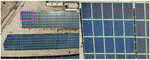
Methods that help intelligent and autonomous systems perceive, reason, and adapt when conditions differ from those seen during training.
I’m a Principal Researcher in Artificial Intelligence at ARQUIMEA Research Center, where I lead research on Generalizable Autonomy for intelligent and autonomous systems.
My work focuses on world models, embodied AI, adaptive agents, planning, memory and robot learning, with the goal of building systems that can perceive, reason and adapt beyond their training conditions.
I have around a decade of experience in AI, spanning computer vision, deep learning, robotics and UAVs, and I’m particularly interested in bridging fundamental AI research with real autonomous systems.
PhD in Artificial Intelligence, 2024
Universidad Politécnica de Madrid
MSc in Artificial Intelligence, 2017
Universidad Politécnica de Madrid
MEng in Research in Systems Engineering and Computer Science, 2016
Universidad de Cádiz
BSc in Computer Science, 2015
Universidad de Cádiz
Building intelligent systems that operate beyond their training conditions.
Methods that help intelligent and autonomous systems perceive, reason, and adapt when conditions differ from those seen during training.
World models, adaptive agents, planning, memory, and robot learning for agents that interact with complex environments.
Computer vision and deep learning for robotics, UAVs, industrial inspection, material understanding, and real-world deployment.
Research directions and applied systems across autonomy, perception, and learning.
Leading research on intelligent and autonomous systems that combine world models, planning, memory, adaptation, and robot learning.
Weak supervision and adaptive learning methods aimed at reducing data requirements and improving deep-learning systems for real-world robotic perception.
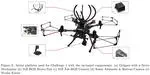
Perception and autonomous-system development for UAV inspection, navigation, trajectory generation, and high-speed search and interception.
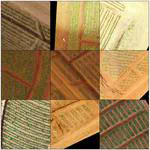
Learning-based methods for single-image fabric digitization and material appearance modelling, including reflectance, opacity, and transmittance estimation.
Peer-reviewed work spanning autonomy, robotic perception, computer vision, and applied machine learning.
A career connecting fundamental AI research with autonomous and industrial systems.
Principal Researcher
Leading the Generalizable Autonomy research line. Previously Project Leader & Postdoctoral Researcher and Postdoctoral Researcher.
Research Scientist
Research on learning-based fabric digitization, generative material modelling, and continuous improvement of the neural-network model behind textura.ai.
Research Scientist
Learning-based computer vision for aerial robotic perception, applied research, industry collaboration, and doctoral work on adaptive learning with weak supervision.
Research Assistant at UPM GFMC and Universidad de Cádiz, and Consulting Intern at Altran, working across electron microscopy, GPU computing, multiview vision, and immersive manufacturing systems.
Professional conversations about AI research, autonomous systems, and research collaboration.
Connect with me through LinkedIn, or explore my complete research record on Google Scholar and ORCID.